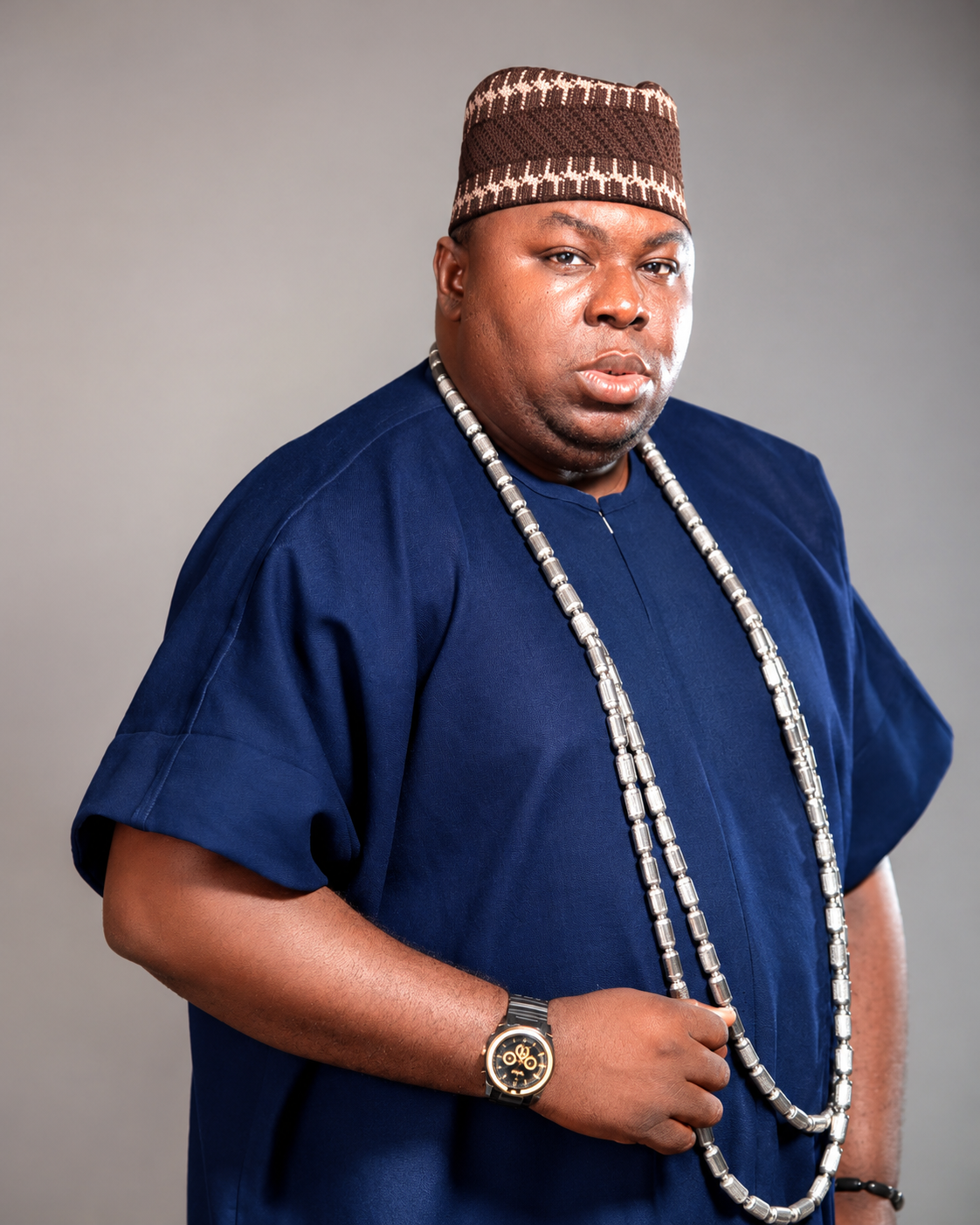

The beefy actor hurries along because his phones ring anxiously. At the varnished entrance he is greeted by a man in a blue cap. He responds with a full grin, not breaking stride. Inside, he settles and gets in character: an armchair officer despised for loud morals. It is a well-rehearsed take and the crew’s seasoned synergy makes a quick scene. A fast-paced crime flick, The Cleaners, premiered in cinemas on October 30th. A couple of hours later, the actor wheels into traffic as a hawk circles directly into the midday sun.
On the grind, the actor shuttles several sets in a week. He is among the most recognizable faces of 21st-Century Nollywood, appearing in over 150 movies to date. If you struggle to remember his name, you may call him Papa Pepe. He epitomized the entertaining side character, so certain is the penchant for comic relief that his first gig cast him as a madman. He was a secondary schooler tailing passion into the world. He played variations on the Gregarious Conservative, appearing in more deadpan roles as he got older: lead character’s uncle (Alaka and GenZ 3), Toyin Abraham’s husband (Wives on Strike), landlord, branch manager (To Kill a Monkey), Ichie Ekene (Love in Every Word 2) police officer (The Cleaners), Father in-law (Oversabi Aunty), Inspector-General of Police (Badamosi), Mr. Uche (She), Sgt. Afolabi (Ginger).
How has he made the typecast work? Consistency. Stuck stubborn to the camera since his first taste running wild on Prophet of Darkness. The year was 1999. The star of that movie was Pete Edochie, playing an exposed clergyman. Initial exposure to Nollywood mainline sets impressed on the young actor lifestyles that his talent could afford, and the distance between where he was and what he desired.
His youth coincided with the industry’s flowering years: continental renown, low budget production, hard storage sales, and fresh performers whose historic performances defined the visual culture of 2000s cinema.
Years of resource seeking finally paid off in a period of excited tech/VC investment toward a new generation of trained filmmakers and licensing deals with Netflix and Amazon Prime. Lavish funding and global attention invigorated Nollywood’s aesthetic, bringing about vibrant productions, narrative complexity, et cetera. The perception of Nigerian film was permanently elevated. Internet generations got box office records like Lionheart, The Wedding Party, Omo Ghetto, The Black Book. This is urbane thriller era; industrial stories casting younger characters and Hollywood-esque stunts. It delivered deeply cathartic scenes like the Eyo masquerade ambush before Tobi Bakare confronted his mentor, Kazeem (Olarotimi Fakunle), in 2023 Gangs of Lagos. By now, personalities from the old Nollywood were veterans. Those who bent with the times delivered dependably, kept relevant, getting star moments on historical stories. As in William Benson in Imoh Umoren’s 2019 The Herbert Macaulay Affair, or 2020 when UK-based author and filmmaker, Onyeka Nwelue, was ringing up actors for Other Side of History, a biopic-style drama he directed. He offered Emeka Okoye the role of Obasanjo.
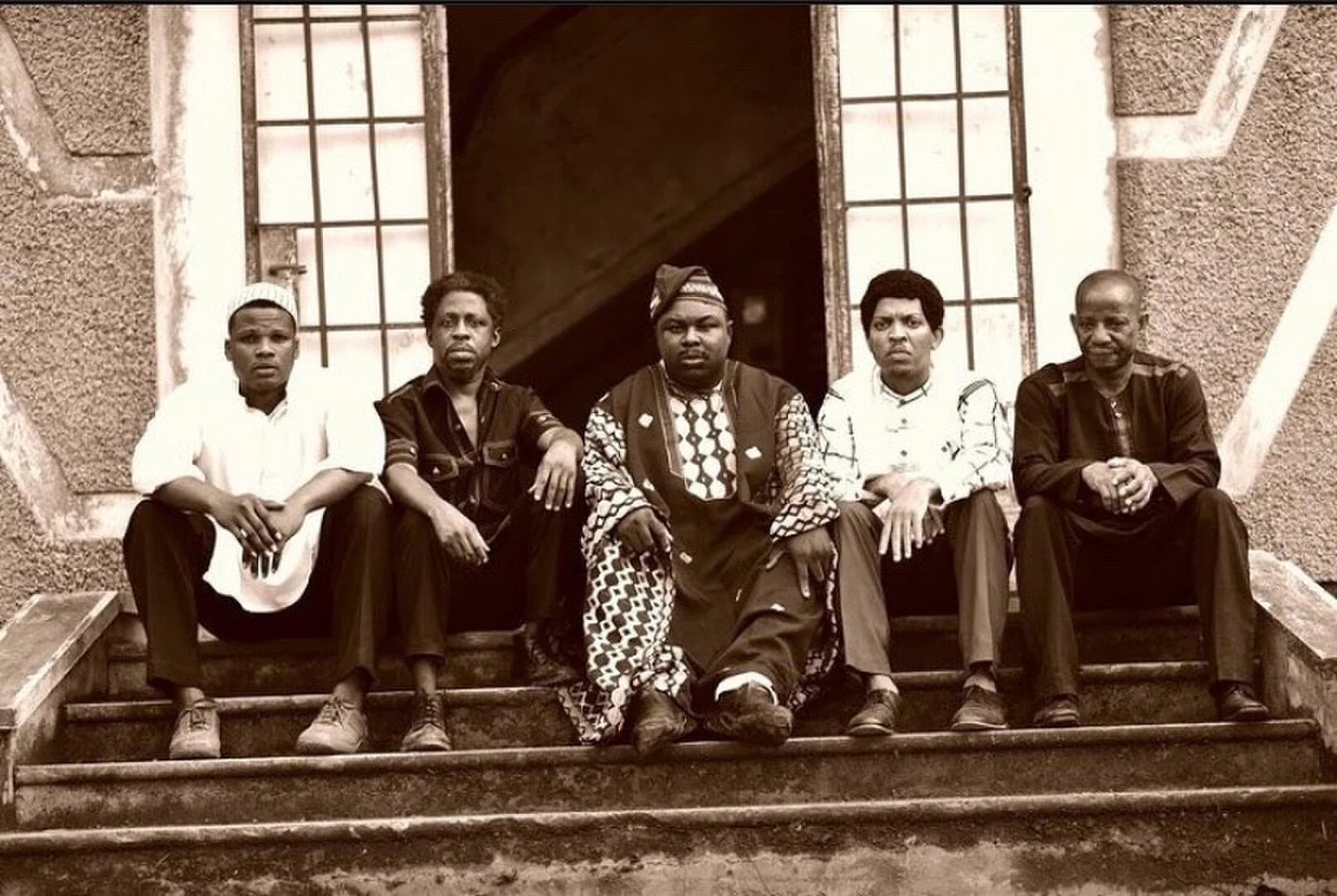
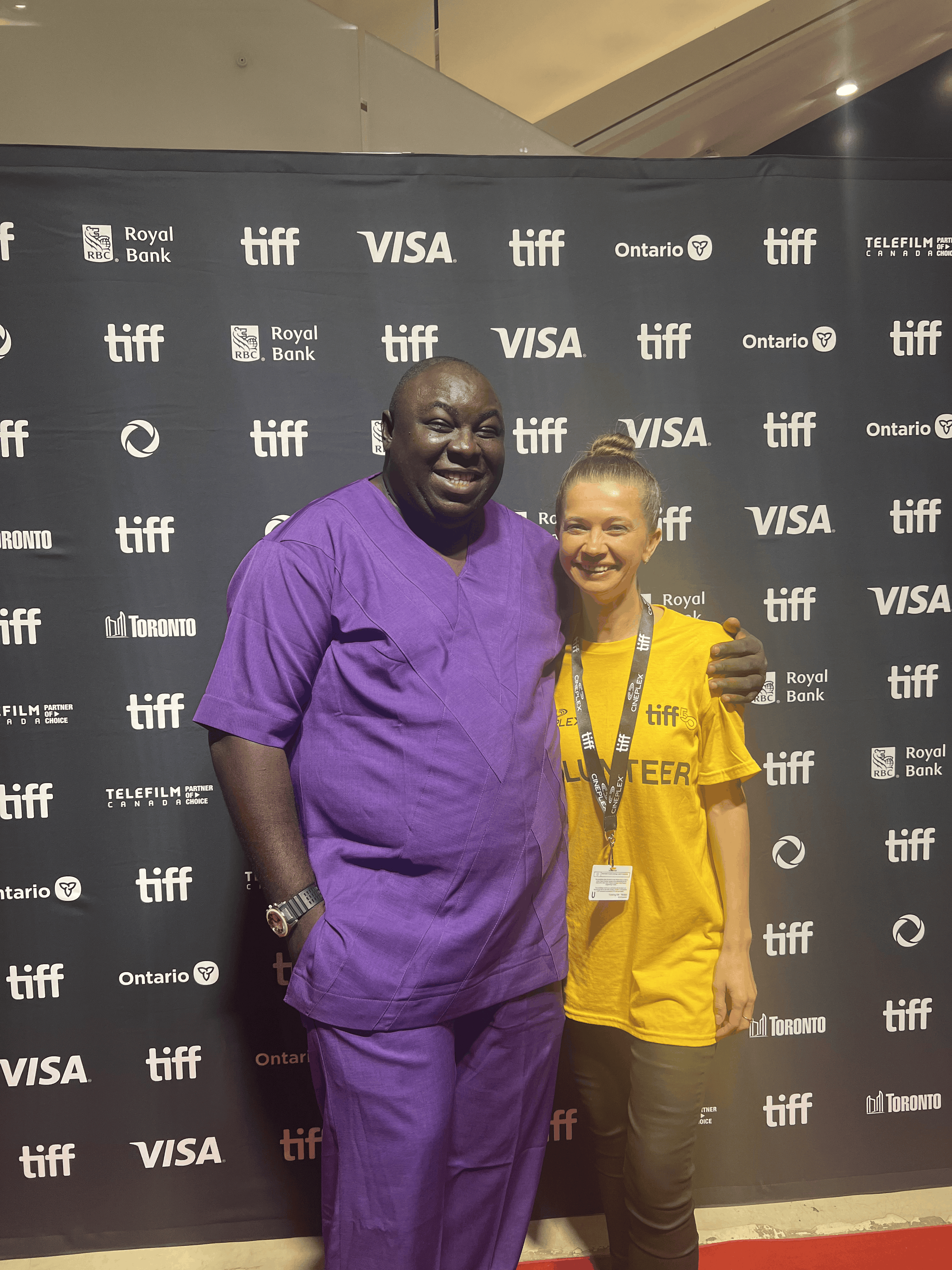
The movie, Other Side of History, centers young Emeka Ojukwu (Greg Ojefua) coming of age in 1958; birthday parties weighted with baddies to lubricated parleys in company of notable intelligentsia from the nation’s first decade: Soyinka (Makinde Adeniran), Okigbo (Hero Daniels), Gowon (Ibrahim Jammal), Achebe (Emeka Darlington). It was shot in Nsukka, on the shaded grounds of the University of Nigeria. Obasanjo appears in a handful of scenes, a thoughtful jovial-faced Second Lieutenant. With a mustache and damask agbada, the actor convincingly conjures those carefree times before leadership and civil war weaned the military engineer’s softer edges. Seamless portrayal of the measured reticence that made the three-time ruler demonstrated the actor’s showmanship working contrasts from his predisposition. In rehearsing, the cast went into archive material. Okoye studied clips of Obasanjo’s young days on the internet, observing the statesman’s mannerisms. The hour-long movie premiered in 2024 at Toronto International Film Festival. It could be pointed out that hard striving for period accuracy resulted in a pedantic edge to the final output. He recalls Nsukka as an artistic moment nevertheless. Between takes of a dispute with Soyinka, he realizes something of the ideological position of a producer. Whether or not they act conscious of it, filmmakers ‘put history together’, as close to facts as they conscionably can present. At least subliminally there is an expectation for something more useful in understanding modern conditions, seeing how the confluence of individual decisions become the story. Entertainment is the vehicle, the excuse. This history draws differently from what he calls ‘packaged information’: web videos, Basic Education Curriculum. Other Side of History was the kind of project that reunited his organs and senses with the emotions that set off a lifelong commitment to entertainment.
AWKA: BURNING DESIRE
Emeka Okoye was born to pious parents in Benin City. Bright, young and expressive, his first attraction to theatre was the glee he felt doing it. He would formally join the industry in 2002, by then a psychology undergraduate at the federal university in Awka. It was as if time was better spent hopping to surrounding cities—Enugu, Onitsha, Asaba—to audition. After featuring in a few flicks including 40 Days and 40 Nights, Holy Prostitute, he decided to pursue Nollywood with all the fire and burning desire to entertain. This was during the Home Video age—80s to mid 2010s—when TVs were the rage, and the compound passage was distribution pipeline, precursor to rentals. Daytime leisure, typically in energy-deprived areas, was defined around cartoons and movies.
Movies contextualized trends, provided escapist pleasure, images of luxury, fashion tips and folk counsel, popular superstitions were reinforced in ‘epics’. We use air quotes here as such films were epics merely in visual language—era, costume and props, etc. The stories are comedies, domestic dramas, a horror kink (material associations with native wisdom being favorite objects) as in Ejiro’s timeless Nneka the Pretty Serpent. Many of these were produced in traditionally organized towns of Onitsha and Asaba, Lagos, Jos, Ibadan. These makers were tenacious salesmen who cultivated massive fan bases through mass media and operated networks to distribute, first, cassettes, then CDs, to markets and stations around the country—at once spring-boarding careers to continental, even global, acclaim. The industry routinely describes itself as the second largest ‘Wood’ in the world, because in 2008 it was releasing almost two hundred pictures a month. Productivity has surged since then. One foolproof model to guarantee demand goes: pepper a populist storyline with a famous cast, and make product very accessible.
The catch for actors on the come up was: be famous in order to take passes at juicy roles, while delivering on juicy roles was the conventional course to fame. This had led to performers promoting themselves via adjacent trades like comedy or advertising. The region is, and always has been, glut with talent. Exploitation is inevitable in a high pressure environment used to working with strained finances. Okoye came up through the jostle. He’d been traveling for bolder projects in further locations months before graduation from university. Part of the patronage he enjoys today comes from relationships formed in search of the next gig. He lived in Awka doing this for some years. He was getting used to being recognized randomly by now, though he did not see himself progressing towards his goals.
A decision to relocate to Lagos brought him within reach of major studios and the most innovative directors of the time. During an AFRIFF fellowship in 2014 he was put through intensive routines by established professionals. He credits that event as ‘a full acting training, the best’ he got as an upcoming act.
How does Emeka Okoye manage his work schedule?
In Lagos I can be in 3 to 4 sets in a week but in-between, I take time off to rest and rejuvenate. Importantly, I attend events when invited, travel for film festivals and vacation to refresh my mind, body and soul so that I can function well back on set.
What ideas are popular among your colleagues regarding the future of Nollywood's data, in a scenario where YouTube and other foreign hosting platforms become unavailable?
We were here before any foreign collaborations or platforms and we will be here no matter who leaves or stays. If foreign platforms vanish, Nollywood can survive financially by partnering directly with local telecoms and aggressively monetizing our massive domestic audience through community cinema circuits.
WHAT LIES AHEAD?
Today Okoye’s scope contains administration, relationships with cinema operators, securing funding for future projects, groundwork involved in keeping audiences at home invested, submitting and showing in new territories, and defending his and allied brands. Assiduity is a habit bolstered on the climb. He continues to work as when he was seeking recognition, of which the industry needs more in global markets.
Okoye tried his hand at producing, posting a number of low-lift romcoms. YouTube is where the community is at these days.
Home video audiences have been on the Google-acquired platform since the fall of discs; the waning of corporate streamer interest and stagnant ticket sales gradually nudged cinematic directors in that direction. Omoni Oboli, Uduak Isong, a class of actor-producers, Mbunabo, Bimbo Ademoye, are some who have recently held mainstream attention for NollyTube releases. They continue in the comfort-watch worldview of the late home video age. Factor in the mischief of self regulation, rushed production timelines due to pressure to please the algorithm, hence the idea of telling a good story suffers more injuries than before 2014. The camp is split: those who favour the all-access platform as a stand-in bridge to home audiences, and ‘festival directors’ who think working for ad money made content creators out of filmmakers. The latter camp stayed with cinema releases, complemented with features at film festivals and cultural events at home and abroad, usually for viewership by art-savvy and stakeholder types. They join critics pointing out the obvious: NollyTube encourages monetizes mass production of sloppy stories for the ‘unthinking masses’ who are appreciative of accessible, simple, amusement to brighten a day’s labour—sloppy stories made more effective now with elevated production standards. Not that they actively desire these stories; the average man consumes whatever mainstream media feeds him heedless of ideological complication. Film critic, Seyi Lasisi whom I borrowed the ‘unthinking masses’ descriptor from, pursues at length the conversation about what stories they want.
Culture producers have followed the money out the mild way, which automatically resulted in entertainment-centric art which tends to be coarse and antics reliant. Nobody else is dancing to all that. Chiemeke’s report is detailed there, ‘None of its (Nollywood) highest-grossing films has generated significant revenue outside Nigeria. Per international valuation, Nigeria’s entire 2025 box office revenue totaled approximately $11.52 million, less than what major Hollywood blockbusters earn on their opening day in a single market.’ Storytelling woes are not new as Nollywood sees itself as a business, rather than a primary art form. They range from style mimics, paucity of spiritual imagination, tired tropes, flimsy expositioning, the things directors get away with under a morality that celebrates appearances over essence. Such must be flushed so our stories can radiate with the authenticity required to own its place in the world. The last decade demonstrated that more money would not solve our problems. ‘An investment in craft’, which presupposes wholesale improvement of storytelling standards is needed to compete with robust creative factories like South Korea and India.
Yet suggesting films are dumber is condescending to much great work that still gets done. ‘Rigorous’ filmmakers just need an easy way to the common man’s screen. There’s another dimension to Seyi’s titular puzzle, ‘Who is Nollywood making films for?’ : if high art is inaccessible to ordinary people, what does it reflect on the priorities of its makers? We need to find it on Glo Tv, Nollistream, or any of the mushroom libraries dedicated to Nigerian content. FilmOne’s KAVA app launch was lauded as the remedy to Prime’s exit, with a premium library, weekly uploads, and affordable plans starting at N4,500. Then it was repeatedly disparaged for technical glitches. Its extent of adoption remains to be seen. Today, 2026, Nollywood suffers a technological weakness. YouTube owns a vast archive of old Nollywood features that would otherwise be lost to time, as well as hundreds of contemporary output. The most watched films from last year are hybrids (cinema/digital) or pure digital releases. The industry lives on rented land.
Okoye regards YouTube as another marketing partner, a stop gap while economists and tech developers figure it out.
Reality is, the majority are comfortable making the best of all worlds, big screens, reels and everything in-between. Okoye regards YouTube as another marketing partner, a stop gap while economists and tech developers figure it out. The true asset is the love of his fans, the community that wanted him before streaming. It has been pointed out that this marketing partner is gaining a bulk of data and shaping behavior. We must own the script, and tell original stories that bring us pride and respect in the real world, such as could be calculated to express soft power; then we can be sure that our careers do not ultimately build some other’s legacy, or risk losing it if these democratic platforms abruptly become unavailable.